Q&A with the Interim Dean
Why did you choose to work at UTCVM?
I got a call from Al Legendre in 1981 about a position in Internal Medicine at UTCVM. My residency at the University of Georgia was 2 months from finishing, time and money were running short, and I was a phone call away from accepting a position elsewhere. I had recently met Al and a few other UTCVM faculty at a meeting, at which time they assured me the internal medicine group at UT was rock solid with no open positions in sight, so I was surprised to get that call. I deferred my decision for the other position I was considering for a few weeks so I could interview at UT, primarily because I had been told such good things about the new veterinary college in Knoxville, and because my interactions with Al and others had been so positive.
When I walked into UTCVM on the first day of my interview, I got a warm and genuine reception from everyone I met, be they faculty, staff, or students. People were working together and had an enthusiasm for teaching that was palpable. What impressed me most was the culture of collegiality and mutual respect. Everyone was smiling and looked like they were having fun. Of course, I figured everyone was on their best behavior, but during the next few days as I met with more people, it became clear that a special community existed here. People cared for each other and cared about teaching, which was repeatedly referred to as “Job #1.” That concept was reinforced by the students I met who, without exception, said that the faculty truly cared about teaching and learning and that they cared about the students. That impressed me. This was a special group of people with a shared vision of purpose, and I knew that if offered, I would accept. We had no family or friends in Tennessee, and Knoxville was a long way from home and family, but I went with my gut. I wanted to be a part of their vision to educate a new generation of veterinarians and enjoy doing so.
What makes UTCVM special?
Despite our growth, the evolution of our programs, and the challenges that are inevitable in a changing environment, the things that first attracted me to UTCVM still exist. We have remained true to our mission to advance animal and human health through education, discovery, and exceptional veterinary care. The words in the college logo are knowledge, compassion, and discovery. If there were room for another word or two to describe the character of our college and the common thread that all who have been a part of UTCVM share, I would add family and care.
What are you most proud of?
That’s a tough one, but the first thing that comes to mind is something that I already mentioned… Teaching continues to be Job #1. I have no doubt that will continue for the next 50 years. Something I don’t think is as appreciated as it should be is how the college has used resources. UTCVM has always been lean, particularly compared to peer institutions. But we continue to develop quality programs that are well-recognized by peers. Our graduates, house officers, and graduate students have always been competitive, sought-after, and successful. They have not been shy about expressing their gratitude for the education that they received here.
What was the college like when you came on board?
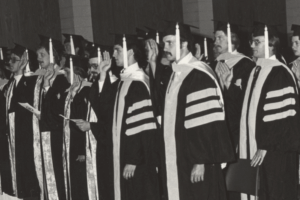
It was 1981, so the college had just graduated its 2nd class. Camaraderie was strong, many faculty were fresh out of graduate and residency programs, and we were all learning together how to build a strong educational program. We had about 40 faculty, which was lean compared to peer institutions. Considering our responsibilities to develop, from the ground up, a new curriculum, a hospital and referral services, new research initiatives, continuing education and outreach programs, and all the required administrative functions, we had our hands full. We relied heavily on each other. For me, that was the best part of being here. The team concept was strong, and I knew others had my back.
The facilities were spacious, new, and modern. We would joke, “What are we going to do with all this empty space?” There was ample teaching space, but the building was designed to accommodate a 3-year curriculum with a class size of 60, so there was no room for growth or to accommodate new and innovative teaching methods.
A few “old-school” administrative traditions were still in play. For instance, the Sequoyah Room was off-limits to everyone except faculty… not unlike a high school teacher’s lounge…a “members-only” inner sanctum for faculty to take a break (and have a smoke!). Security was non-existent. None of the CVM’s external doors were locked. Many faculty and staff resisted when we finally started to lock doors after-hours. Doing so would be inconvenient!
Technology was pretty fundamental: no computers, no pagers, and no cell phones. Communication within the hospital occurred via intercom, wall-mounted phones with long cords that could stretch halfway down the clinic corridors, and wall-mounted two-way radios, appropriately referred to as squawk-boxes because of their shrill sound. The entire hospital was equipped with these devices. Our preferred method for communication method was face-to-face…inefficient, but remarkably effective. Sophisticated lecture technology consisted of 2×2 slide presentations with overhead projection (dual projection for the more adventurous faculty) and recently developed VCR movies that required us to roll clunky portable TVs into the lecture halls. We had no instructional support.
The curriculum was on a three-year, round-the-clock schedule. Students started in June and emerged as veterinarians 36 months later. They had no summer break and minimal time off to transition from classroom work to the clinics. It was tough. We began a traditional 4-year curriculum in 1989, which added another class of students. That’s when the big squeeze began. We had to convert research space into lecture space and storage rooms into teaching rooms, which started a cascade of other renovations that continues to this day.
What were some of the challenges you faced?
Limited resources, particularly staffing in the hospital and support services. Holiday “breaks” were anything but a break for clinicians. I remember many breaks when Becky Gompf was at the front desk managing client phone calls and admissions/discharges, Al Legendre was filling prescriptions in the pharmacy, Jim Brace was managing ICU, DJ Krahwinkel was serving as anesthesiologist-surgeon-hospital director, and I was shoveling snow off the hospital steps… all while managing hospitalized patients. Parking was as much of a challenge then as it is today. No complaints, however. We made it work, and we made it fun.
What was your favorite position held at UTCVM?
Without a doubt, being in the clinics working elbow-to-elbow with students and residents was the best. No matter how long or tough of a day it had been, if there was one moment during the day when that light came on in a student’s mind when I could see that they “got it,” it was a good day. Mentoring residents took that sense of satisfaction to an entirely different level. We had stellar residents. It was tough staying a step ahead of them. Truth be told, they mentored me.
What advice do you have for new students?
Everything you will be exposed to during your time at UTCVM, be it educational, personal, or somewhere in between, is a teachable moment—take advantage. Take advantage of opportunities that are available outside of your curriculum. Participate in CAIT, HABIT, and social activities. Volunteer in the hospital. Apply for the summer research program. Don’t hesitate to ask for help. Most importantly, have fun.
How has UTCVM changed and what do you see in the future for UTCVM?
So much has changed… where to start?
Faculty & classes were predominantly male… about 75%, and our college population was much smaller. Classes were 60 – 65 students each. The faculty was less than half of the current size; everyone’s photo could fit on one composite. The staff, particularly hospital, laboratory, and research staff, was very lean. We had 10 residents in SACS, 6 in LACS, 2 in Pathobiology, and no interns. Currently, the veterinary medical center has a total of 49 residents and 18 interns. There were a handful of graduate students, but no formal graduate program existed within the college.
The Veterinary Medical Center did not exist as a unified entity. Large Animal Clinical Sciences (originally Rural Practice), Small Animal Clinical Sciences (Urban Practice), and Avian & Exotics (Environmental Practice) operated as separate hospital units. Radiology was a shared service. Technologies such as ultrasound, CT, MRI, and the linear accelerator were way out of our financial reach; some predicted that we would never enjoy such capabilities. Services such as Pharmacy, Medical Records, Computer Operations, and the Business Office operated as independent units; Hospital Operations did not exist. And Client Services was much different. Rural and Urban Practices operated their own reception desks and communications. Dictation and word transcription (typewriters) were considered to be an advanced method of communication.
The CVM’s Office of Research did not exist. Research programs were in the early stages of development and most were located on the main UTK campus. And because the CVM Dean’s office was located in Morgan Hall, sightings of the Dean anywhere in the CVM were an infrequent occurrence!
Perhaps the most re-defining changes have occurred through the development of unique and innovative programs developed at UTCVM that go far beyond the scope of veterinary education that existed when I came to UTCVM. Programs such as Veterinary Social Work, the Master Teacher Program, Human Animal Bond in Tennessee, Companion Animal Initative of Tennessee, the Vet Tech Intern Program, the Center for Agriculture and Food Security and Preparedness, Public Health, and the One Health Initiative have added to the depth and richness to UTCVM’s educational and research profiles. Other veterinary college’s aspire to develop and pattern such programs.
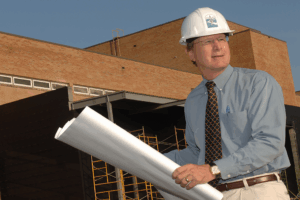
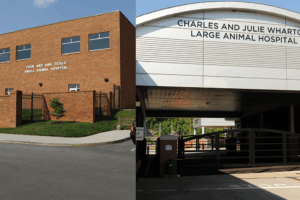
The most palpable change that has impacted everyone here is the growth of our building which has almost doubled in size. And more growth is to come in the near future. Doing so will allow continued advancement of educational, research, and hospital programs. Precisely what that will look like is hard to predict in an environment where the needs for medical, social, agricultural, and economic health seem to change daily. But our college has a history of being creative, agile, and responsive. I have no doubt that this will continue, and in doing so, UTCVM will continue to be relevant and positively impact societal needs in Tennessee and beyond.
Explore More on
Knowledge
MORE FROM THIS ISSUE