
An Update on the “Anaplasma phagocytophilum modulate tick gene expression for its survival and transmission from the vector host”
The future of higher education depends upon leaders who look beyond the classroom, actively seek opportunities, and build bridges across academia and industry. By doing so, colleges can not only adapt to future challenges but also shape them, ensuring a resilient and forward-thinking educational landscape.
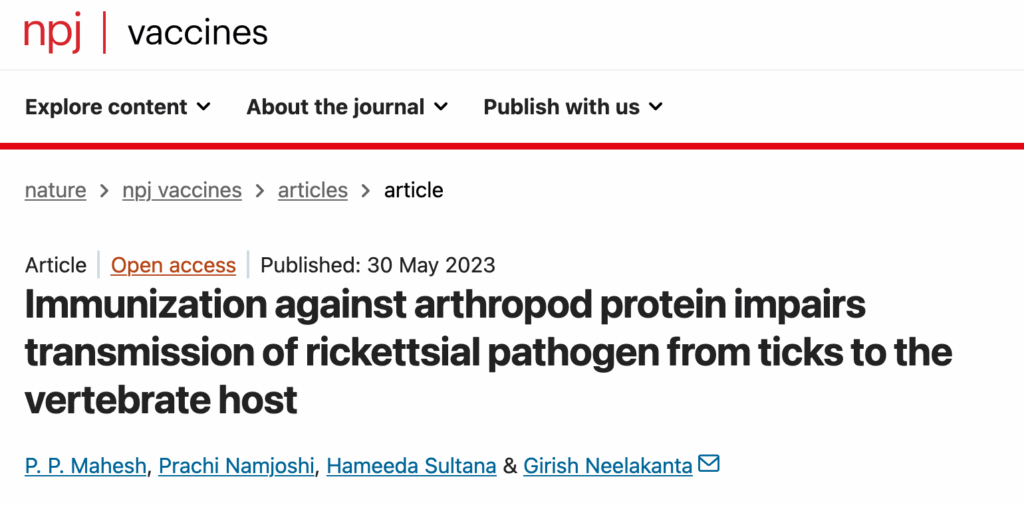
Human anaplasmosis, caused by A. phagocytophilum bacteria, is the second most common tick-borne disease in the United States. Anaplasma phagocytophilum also infects several domesticated animals. A. phagocytophilum is an obligate intracellular bacterium that is transmitted to humans and animals by the bite of an infected black-legged Ixodes scapularis tick. In the previous funding period, the researchers’ laboratories have published several manuscripts in high peer-reviewed journals that detailed the role of arthropod transporter protein and tryptophan pathway in the survival and transmission of A. phagocytophilum from ticks to the naïve vertebrate host. In the current funding period, they will be performing immunization studies to understand whether blocking arthropod molecules affect transmission of this bacteria from ticks to the vertebrate host. In addition, they will perform molecular studies to decipher the role of arthropod tryptophan pathway and microRNAs in the transmission of this bacteria from ticks to the vertebrate host.

Collectively, these studies not only provide information to understand interactions of pathogens with their arthropod vectors but also could lead to the development of anti-vector vaccines to target this and perhaps other ticks of medical importance.
To read more about the work our vector-borne researchers are doing visit the following links to view some of their publications:




MORE FROM THIS ISSUE