Teamwork in Motion
On a February winter day in 2024, Katie Van Slyke expected to find a routine scene at her Williamson County farm. Instead, she discovered a tiny foal standing beside his mother in the field, attempting to nurse, despite being born on the 286th day of gestation, significantly shy of an average 340-day equine pregnancy. In the realm of horse breeding, such extreme prematurity almost always spells immediate heartbreak. Even though most horses born before 310 days are not viable, Van Slyke recognized the spunky fight in the foal she named Baby Seven and promised not to give up as long as he didn’t. The foal spent his first four months of life at the Tennessee Equine Hospital in Thompson’s Station.
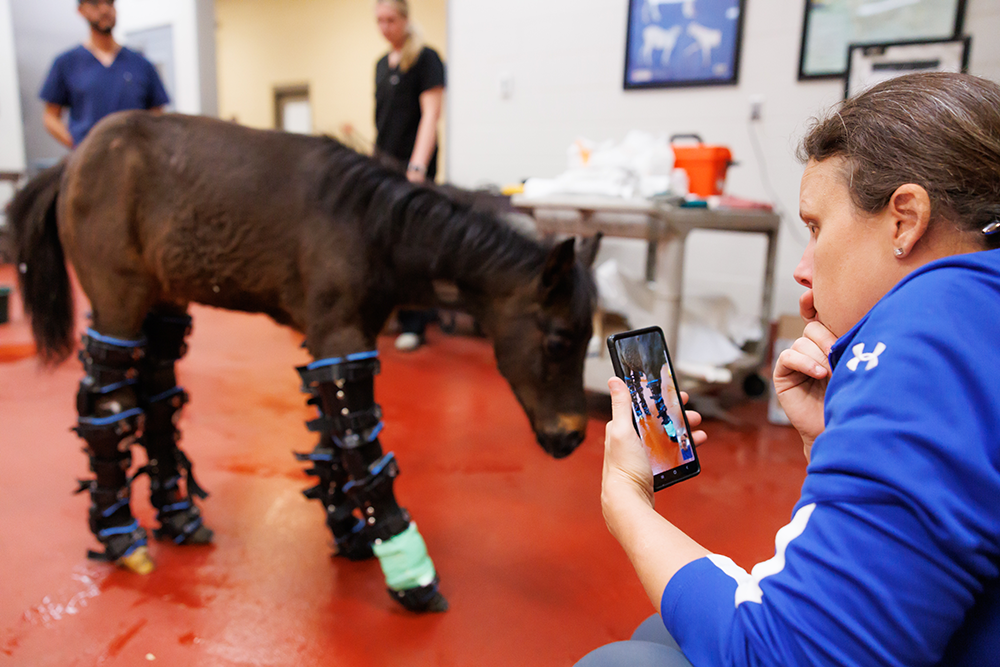
Van Slyke, a prominent voice on social media with over four million followers on both TikTok and Facebook, shares content about her life as a horse breeder and farm owner, including the positive and the challenging aspects of farm life. Baby Seven’s sometimes tumultuous journey unfolded publicly on her social media.
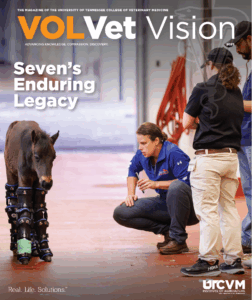
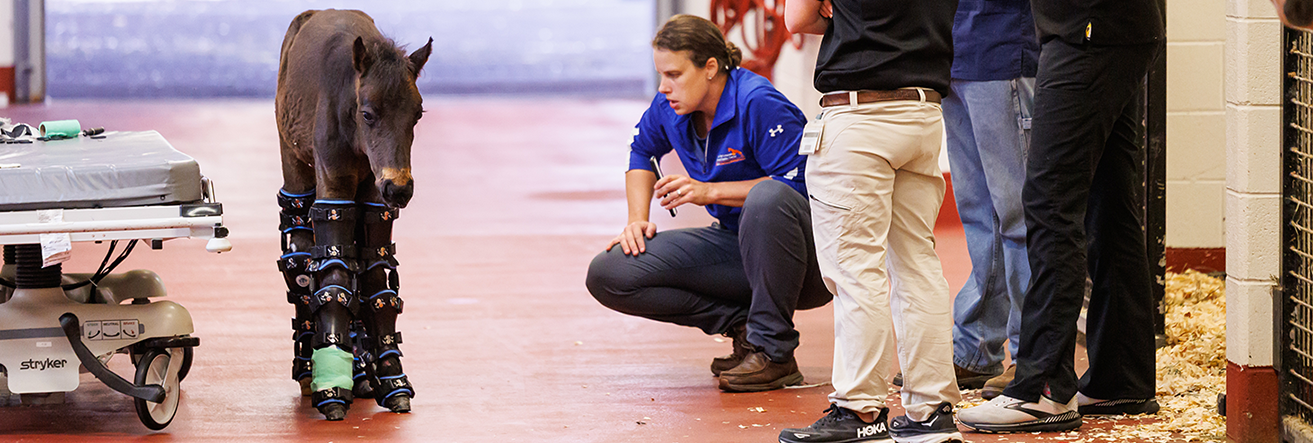
Cradled in the back of an SUV with a stuffed horse, Baby Seven arrived at the Equine Performance and Rehabilitation Center at UTCVM on July 2, 2024, a limp noodle with no ability to support himself properly or walk for extended periods. The top three daunting clinical challenges for Tena Ursini, assistant professor of equine rehabilitation, included “that right carpus going the wrong direction, the left hind fetlock that did the wobble thing, and was he gonna’ survive?” says Ursini.
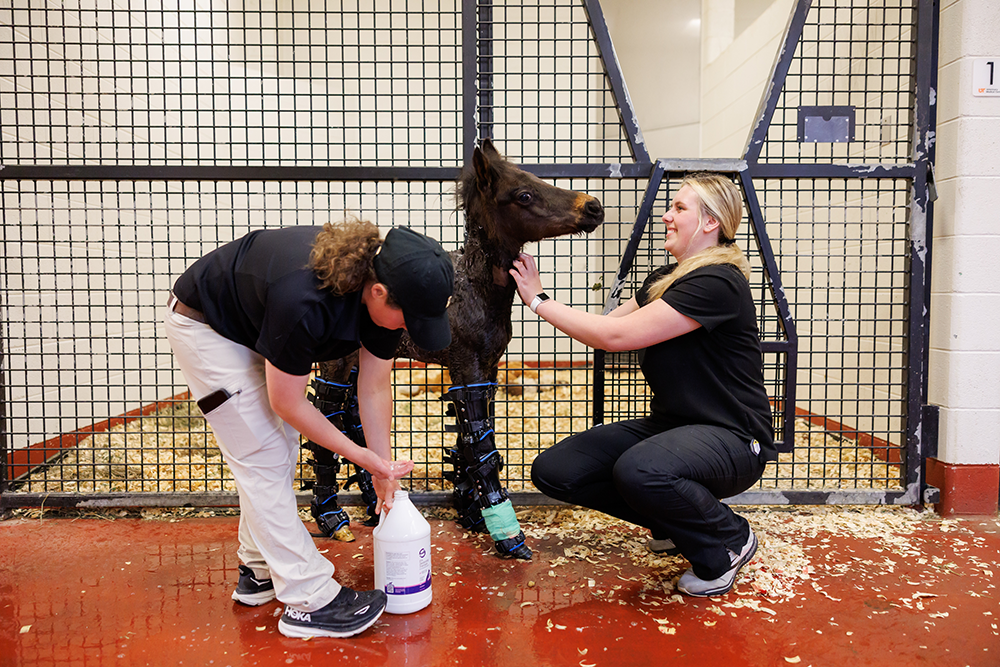
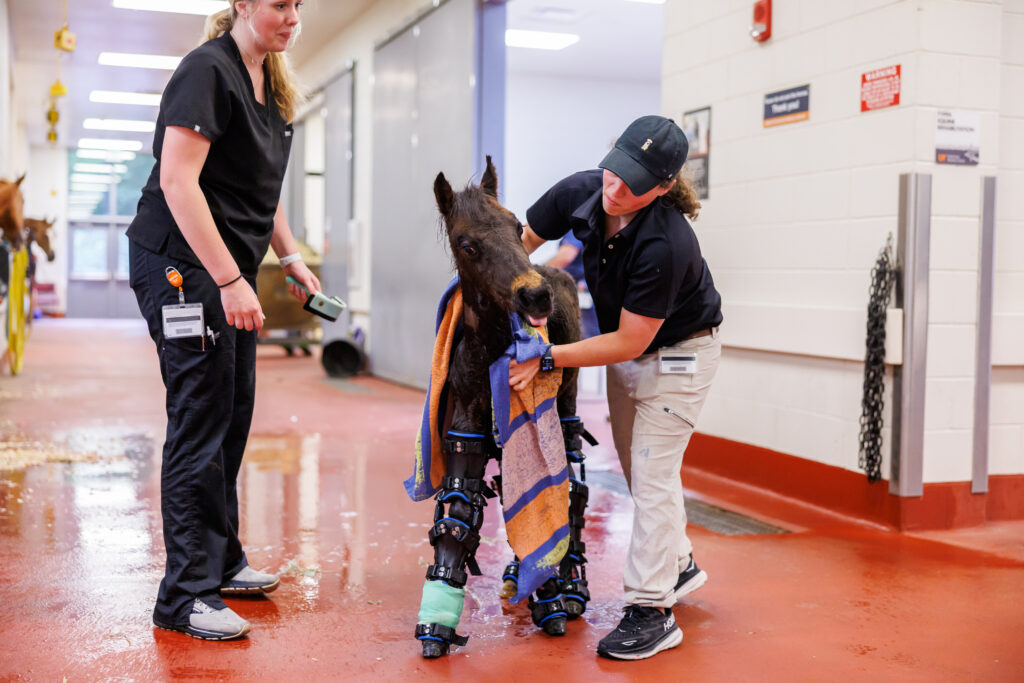
Ursini warned Zoe Staloff, one of the veterinary technicians who worked with the foal, not to get attached. But as they were drying him off after floating him in the water the first time, they looked at each other with eyes that said, ‘How do we not get attached?’ According to Staloff, they couldn’t ask for a better patient. “Especially with everything we had to do to treat him. We had to lift him on the gurney every day for wound management and bandage changes. Seven’s main concern was, ‘Are you going to feed me?’”
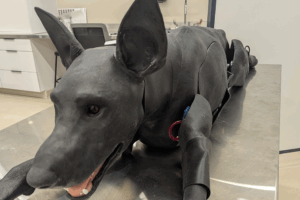
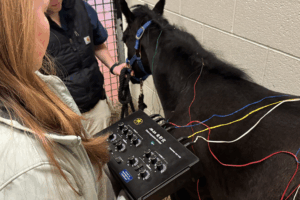
Taking advantage of his food motivation, Baby Seven noshed on milk from the green bucket and alfalfa hay while molds of his legs were cast for custom orthotic braces and during laser therapy and shoe fittings. When veterinarian Alex Villagomex arrived for his year-long sports medicine fellowship and saw Baby Seven on the gurney as his splints were adjusted, he asked, “How much sedation does he have? What do you mean, none?” Eventually, Baby Seven would follow the hay bucket to the scales or through the rehab facility for exercise.
Baby Seven’s status as a perfect patient was mirrored by Van Slyke as a dream client. “We had daily conversations, and she would ask about the why or the how to better understand the thought process that went into some of our decisions, but the level of trust and confidence was refreshing,” says Ursini. Throughout the rehabilitation, Van Slyke remained realistic. When facing roadblocks or a fork in the road, money was not an issue, but Van Slyke and the team refused to put Baby Seven through anything he wasn’t willing to do. “On day one, Katie told me, ‘If he’s not happy, we’re not happy.’ And the only goal was to let him be a happy pasture pet, but if that wasn’t possible, she wasn’t going to force him to go on.”
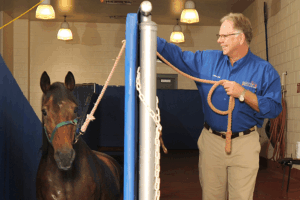
But until August 11, 2025, Baby Seven never held up a stop sign. While the premature foal’s treatment called for the entire team to think outside the box, certified journeyman farrier Jeremy Davis lived outside the box working with his hooves. During Baby Seven’s nine-month stay at UTCVM, Davis could adapt therapeutic shoes daily. “We’d put something on and it didn’t have the intended effect or had an unintended consequence, and then we could change it immediately,” says Davis. “In theory, a particular shoeing technique should work, but Seven is like, ‘Nah, I missed that day in my textbook. I’m not doing it,” Davis says with a grin.
Significance of Seven
His dam was bred on May seventh, marking the seventh anniversary of her winning an AQHA circuit championship at the Lucky Seven Classic. He was her seventh foal. He was supposed to be the last foal of the season, but was born the seventh week of the year, fifty-four days premature. The foal named Seven came to the University of Tennessee College of Veterinary Medicine in the seventh month of 2024.
Reflecting on the experience of working with Baby Seven, senior veterinary student Ashton Bazzell captured its essence. “He really showed me that every case is individual, whether it’s as severe as his or a horse with a minor lameness. It’s up to me as the primary care veterinarian to give it everything that I have to make that horse as happy and healthy as possible.”
For Ursini, Baby Seven’s transformation from “a limp noodle to a dude chasing the hay cart” stands as proof of the power of physical rehabilitation.
Zoe says the team, including Van Slyke, had the same goal: “Get him home so he can just have a happy, comfortable life. Katie would post videos of him grazing and being a horse. That was the whole point. That’s why we did what we did.”
Baby Seven’s story underscores how teamwork between the owner, animal, and medical professionals can rewrite outcomes and inspire hope where none seems possible.
As Baby Seven’s story unfolded with weekly updates on Van Slyke’s social media, it became a testament to the power of community and rehabilitation. From day one, her transparent updates demystified the complexities of neonatal care and physical rehabilitation, and followers celebrated each milestone and sympathized with each setback.
Baby Seven was euthanized on August 11, 2025, after showing signs of colic. His life was a testament to hope, compassion, and the tireless dedication of everyone who cared for him. His journey was remarkable, not only for his resilience and spirit but for the profound impact he made. We witnessed firsthand the strength and joy that Seven brought to each day, inspiring us all to give our very best.

Explore More on
CompassionDiscoveryKnowledge
MORE FROM THIS ISSUE